
Why Email Is Still the Favorite Tool of Hackers
Cybercriminals have plenty of sophisticated tools available, but they keep coming back to email because it works. Most breaches do not begin with some movie-style hacker pounding away in a dark room. They begin with a normal person opening a normal-looking email and making one bad click.
Sometimes the email leads to a fake login page. Sometimes it includes a poisoned attachment. Sometimes it simply tricks the recipient into sending information they never should have shared. However it happens, the result is the same. Attackers gain access to passwords, inboxes, customer data, invoices, or internal systems.
Email attacks succeed because they rely on human behavior more than technical weakness. Hackers know people are busy and skim messages. They know most of us are trying to clear our inboxes, not inspect every letter like a detective. That is exactly what makes phishing so effective.
The Classic “Something Is Off” Email
Many phishing emails give off a faint smell of nonsense. The trick is noticing it before you click anything.
The sender address is slightly wrong
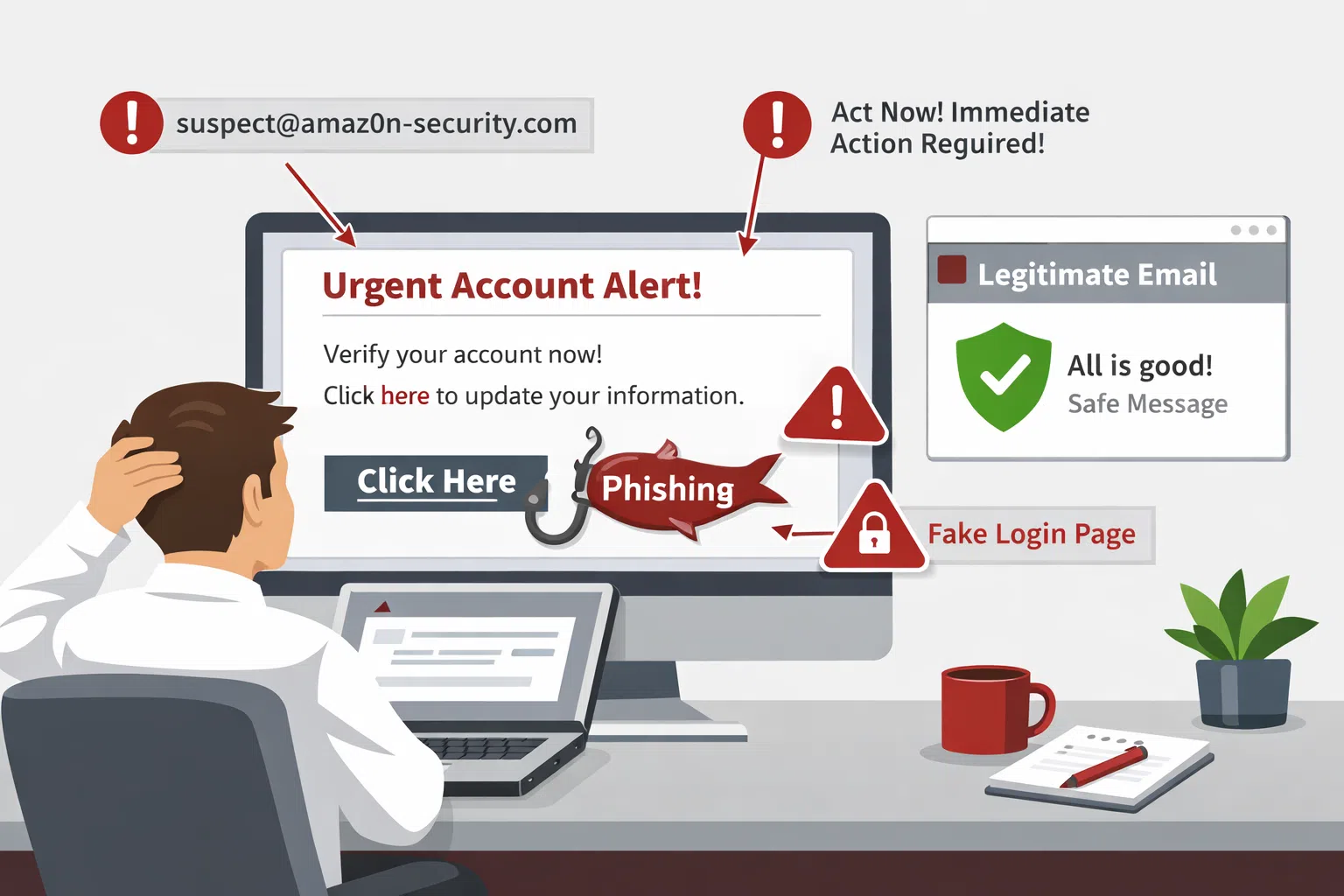
At first glance, the message appears to come from a familiar company. Then you look closer and the address is not quite right. The display name may say Microsoft, but the actual sender is something like account-alert-microsoft-secure-login.example.com. That is not Microsoft. That is a trap with a necktie.
The email creates urgency
Phishing messages love panic. They warn that your account will be suspended today, your payment failed, your mailbox is full, or suspicious activity was detected. The goal is simple: make you act first and think later. Real companies may occasionally send urgent notices, but urgency by itself proves nothing.
Attachments Can Be Dangerous Too
Not every phishing attempt revolves around a link. Some rely on attachments that appear harmless. A fake invoice. A shipping notice. A payroll form. If you were not expecting the file, verify it before opening it. If it arrived from someone you do know, but the wording feels strange, verify it anyway.
The Fake Login Page Trick
This is one of the most common scams we see now, and it fools plenty of smart people. The email claims to be from Microsoft, Google, your bank, or your credit card company. It says your password expired, your account needs verification, or your access was temporarily restricted. It includes a helpful button that says something like “Verify Account” or “Sign In Now.”
You click the button and land on a page that looks completely legitimate. Same logo. Same colors. Same familiar sign-in box. You enter your username and password, and the attacker now has your credentials.
That page was never the real Microsoft or Google login screen. It was a costume. Attackers do not need you to download malware if they can simply talk you into handing over the keys.
How to avoid the fake login page scam
The easiest defense is also the least glamorous. Never log in to an account from a link inside an email unless you are absolutely certain it is legitimate. Instead, open your browser and go directly to the official site yourself. If the alert is real, it will still be waiting for you after you sign in through the real website.
Real Phishing Examples We See in Small Businesses
“Your Microsoft password is expiring”
This one is everywhere. The message looks polished and official. The button looks helpful. The destination is a fake login page. Once the password is stolen, the attacker can access email, reset other passwords, and send more phishing messages from inside the business.
“You have a secure document waiting”
These often pretend to come from Dropbox, SharePoint, Google Drive, or DocuSign. Since real businesses share documents all the time, the email blends in nicely. The user clicks, expects a file, and gets a fake sign-in prompt instead.
“Invoice attached”
Small businesses receive invoices regularly, which makes billing emails a perfect disguise. If the message references a vendor you do not recognize, a project you did not approve, or a payment that makes no sense, slow down.
“Suspicious activity detected on your bank account”
This scam relies on fear. The email pushes you to sign in immediately, often through a fake banking portal. If you receive a message like this, do not click the link. Go directly to your bank’s official website or app and check your account there.
Why Small Businesses Are Frequent Targets
Large companies usually have dedicated security teams, expensive tools, and multiple layers of review. Small businesses often have none of those luxuries. That does not mean small businesses are unimportant. It means they are easier to hit.
One compromised inbox can expose payment instructions, customer communications, tax information, payroll details, or cloud storage access. That is why many companies rely on small business computer support nj providers to help secure email systems, implement filtering, and train employees to recognize suspicious messages before trouble starts.
The 5-Second Phishing Test
Before clicking any email link, take five seconds and ask yourself these questions:
- Do I recognize the sender address?
2. Is the message trying to scare or rush me?
3. Does the link really go where it claims to go?
4. Was I expecting this attachment or document?
5. Is this email asking for a password, login, or payment change?
If anything feels off, stop. Delete the email, verify it another way, or ask someone to look at it. Five seconds of skepticism can save hours of cleanup and a great deal of money.
Stop Looking for Email Shortcuts. Start Protecting Your Business.
Phishing emails are not going away, and they are not getting less convincing. The good news is that most of them still rely on the same predictable tricks: urgency, imitation, fake login screens, and inattentive clicks. Once you know what to watch for, the scam becomes much easier to spot.
Landau Consulting helps businesses improve email security with practical guidance, employee awareness, and small business computer support nj services built for real-world operations. If your team needs help tightening email security, evaluating suspicious messages, or reducing day-to-day risk, contact Landau Consulting today.